Protect Your Child's Vision for Life
Myopia (nearsightedness) isn't just about glasses—it's a progressive condition that can lead to serious eye problems later in life. Our proven treatments slow progression and protect your child's future.
Myopia Is More Than Just Blurry Vision
High myopia significantly increases your child's lifetime risk of vision-threatening conditions.
Retinal Detachment
Higher risk of the retina separating from the eye
Glaucoma
Increased pressure that damages the optic nerve
Myopic Maculopathy
Central vision loss from retinal thinning
Cataracts
Earlier development of clouded lens
The good news? By slowing myopia progression now, we can significantly reduce these risks for your child's future.
Doctor's Insight: Myopia in Children
Direct Answers from Dr. Bonakdar
At what age should myopia treatment start?
We recommend starting myopia management as soon as progressive nearsightedness is detected, which can be as young as 5 or 6 years old. The earlier we intervene, the more effective the treatment is at slowing progression. Every diopter we prevent reduces the lifetime risk of retinal detachment, glaucoma, and myopic maculopathy.
Does Ortho-K hurt children?
No. Children adapt to Ortho-K lenses very quickly, usually within 2-3 nights. The lenses are worn during sleep, so there is no daytime discomfort at all. Modern hyper-oxygen-permeable materials ensure the eyes breathe safely overnight. Most kids actually prefer Ortho-K over glasses because they can play sports and swim freely during the day.
Can myopia be reversed in children?
We cannot reverse myopia that has already developed, but we can significantly slow its progression — by 50-70% with treatments like Ortho-K, low-dose atropine, or MiSight lenses. The goal is to keep the prescription as low as possible to reduce long-term health risks. The sooner treatment starts, the better the outcome.
Proven Myopia Control Methods
We offer multiple FDA-approved and evidence-based treatments tailored to your child's needs and lifestyle.
Ortho-K
Night Lenses
Wear lenses only at night. Wake up with clear vision all day. Perfect for active kids and sports.
Pros:
- No glasses during day
- Great for sports/swimming
- Reversible
Considerations:
- Nightly wear required
- Initial adjustment period
Best for: Active children ages 8+
Stellest Lenses
Spectacle Lenses
Special glasses with innovative defocus technology. Look like regular glasses but control myopia.
Pros:
- Easy to use
- Look like normal glasses
- Highest efficacy
Considerations:
- Must be worn full-time
- Still wearing glasses
Best for: Younger children, those who prefer glasses
MiSight Contacts
Soft Daily Lenses
Daily disposable soft contacts designed for myopia control. Easy for kids to handle.
Pros:
- Easy to insert/remove
- Fresh lens daily
- FDA approved
Considerations:
- Daily insertion needed
- Lens cost
Best for: Children comfortable with contacts
Low-Dose Atropine
Eye Drops
Nightly eye drops that slow eye growth. Often combined with other treatments for enhanced effect.
Pros:
- Very easy to use
- Can combine with glasses
- Low cost
Considerations:
- Nightly drops
- May cause light sensitivity
Best for: Add-on therapy, very young children
Not sure which is right for your child? We'll help you decide during their consultation.
Book Free ConsultationEssilor Stellest Lenses: Slowing Myopia by up to 67%
The first and only FDA market-authorized spectacle lens proven to slow myopia progression in children — using breakthrough H.A.L.T. technology.
How H.A.L.T. Technology Works
H.A.L.T. (Highly Aspherical Lenslet Target) uses a constellation of 1,021 invisible micro-lenslets arranged in concentric rings across the lens surface.
These lenslets create a volume of signal in front of the retina that slows the elongation of the eye — the primary cause of myopia progression. Unlike standard glasses that only correct vision, Stellest actively works to slow the condition.
The lenslets are invisible during normal wear. Children see clearly, and the glasses look identical to regular eyewear — no thicker or bulkier.
Clinical Evidence
67% slower progression on average over 2 years in a randomized, double-masked clinical trial
FDA Breakthrough Device designation granted April 2021
90% of children adapt within 3 days, 100% within one week
Recommended wear: 12+ hours daily for maximum efficacy
No adverse side effects reported in clinical trials; vision quality identical to standard lenses
Can be combined with low-dose atropine drops for enhanced effect
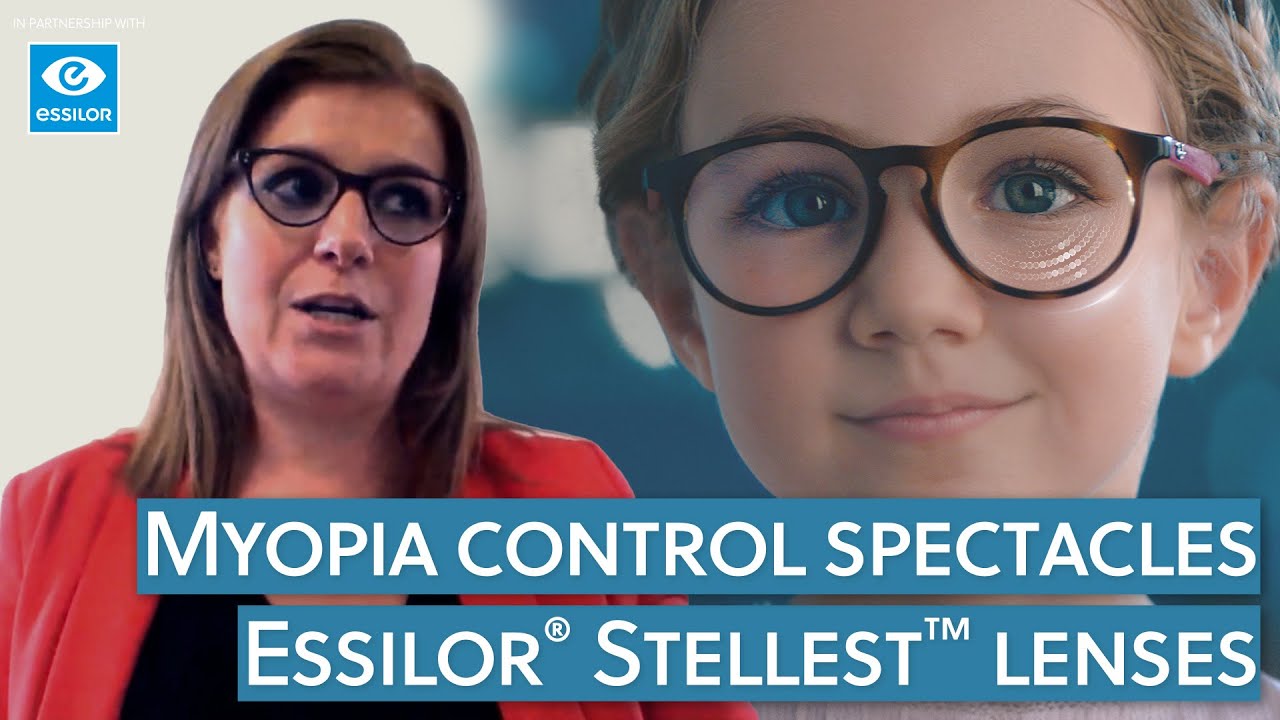
Myopia Control Spectacles | Essilor Stellest Lenses
Learn how Essilor Stellest lenses with H.A.L.T. technology slow myopia progression in children.
Ideal Candidates for Stellest
- Children ages 6-12 at initiation of treatment
- Kids who prefer glasses over contact lenses
- Younger children not yet ready for contacts
- Families wanting the highest efficacy spectacle option available
Available at EyeCare Center OC — We are an authorized Essilor Stellest provider. Schedule a myopia evaluation to find out if Stellest is right for your child.
Full Stellest guide: pricing, FDA authorization & clinical evidence →CooperVision MiSight 1 Day: FDA-Approved Myopia Control Contacts
The first and only FDA-approved soft contact lens proven to slow myopia progression in children — with 6 years of clinical evidence.
Myopia Control for Children with MiSight 1 Day | CooperVision
How MiSight 1 day contact lenses slow myopia progression in age-appropriate children using ActivControl technology.
Parent & Child Satisfaction
of parents reported their children were happy wearing MiSight
of children after 3 years preferred MiSight over glasses
of children ages 8-12 could handle lenses independently
or better vision achieved across all visits over 6 years
How ActivControl Technology Works
MiSight 1 day lenses use ActivControl Technology — a dual-focus optical design that simultaneously corrects refractive error and produces myopic defocus to slow axial elongation of the eye.
The concentric ring design alternates between correction zones (for clear vision) and treatment zones (that create defocus signal). This dual-action approach addresses both the symptom and the progression of myopia.
As daily disposables, each lens is fresh and hygienic — reducing infection risk compared to reusable lenses. Children simply wear them during the day and dispose of them at night.
Clinical Evidence (3-Year & 6-Year Data)
59% slower myopia progression on average over 3 years vs. single-vision lenses
52% reduction in eye lengthening (axial elongation) over 3 years
41% of eyes showed zero progression during the study period
6-year data: children progressed less than -1.00D on average
FDA-approved for children ages 8-12 with -0.75 to -4.00D myopia
Astigmatism up to 0.75D can be corrected
Available at EyeCare Center OC — We are a certified CooperVision MiSight provider. Ask us if your child is a candidate during their myopia evaluation.
Full MiSight guide: cost, candidacy & clinical evidence →Your Child's Myopia Journey
Comprehensive Myopia Evaluation
60 minutesWe measure your child's current prescription, axial length (eye length), and assess their myopia risk factors including family history and lifestyle.
Treatment Selection & Discussion
30 minutesWe discuss all options and help you choose the best treatment based on your child's age, prescription, maturity level, and daily activities.
Custom Fitting & Training
45-60 minutesWhether it's Ortho-K lenses, Stellest glasses, or contacts, we ensure a perfect fit and teach your child how to care for their treatment.
Quarterly Monitoring
30 minutes per visitRegular check-ups track axial length changes and ensure the treatment is effectively slowing progression. We adjust as needed.
Understanding Myopia Control
Dr. Bonakdar explains myopia management and helps parents understand their options.
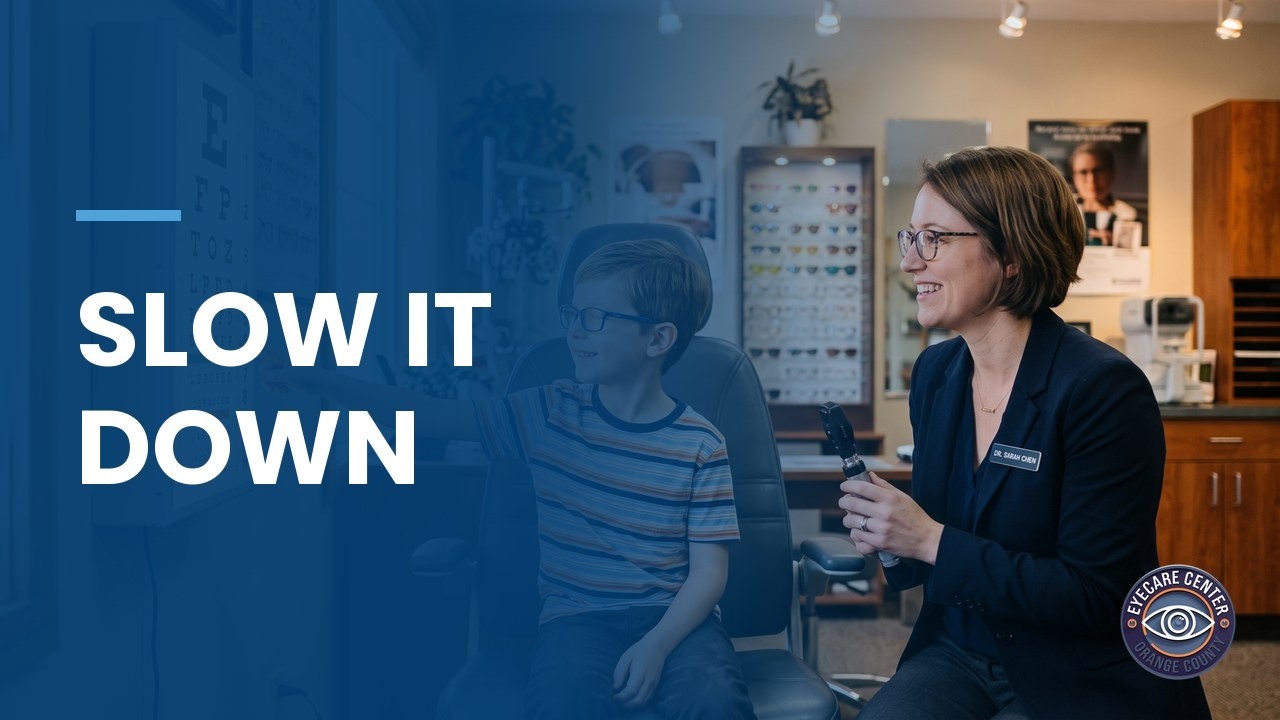
Myopia in Children — Short-sightedness can be slowed
Short-sightedness can be slowed.
Myopia Control Success Stories
Real families, real results from our Orange County practice
Emma S.
Age 9
"Emma loves her new glasses! She doesn't complain about them at all, and her eye doctor says her myopia has slowed down by 60%."
Outcome:
60% slower myopia progression after 1 year
Michael T.
Age 11
"We were told Michael would likely be -8.00 or worse by high school. After 2 years of treatment, he's only -3.50 and stable. The combination approach really works!"
Outcome:
Myopia stabilized at -3.50 instead of predicted -6.00+
Ashley W.
Age 8
"Ashley was nervous about contacts, but the team made it so easy. She's been wearing them for a year and her prescription has barely changed!"
Outcome:
Only -0.25 change in 12 months (vs typical -0.75)
* Patient names abbreviated for privacy. Results may vary. Individual outcomes depend on various factors.
Frequently Asked Questions
Why should I treat my child's myopia? Can't they just wear glasses?
Glasses correct vision but don't stop the eye from growing longer. High myopia (greater than -6.00) significantly increases the risk of retinal detachment, glaucoma, and macular degeneration later in life. By slowing progression now, we protect your child's long-term eye health.
At what age should myopia treatment begin?
Earlier is better! Treatment is most effective when started early in the myopia progression curve, typically between ages 6-12. However, we can help at any age. If your child's prescription is changing each year, it's time to consider treatment.
How do I know if my child is a candidate?
Signs include: needing stronger glasses every year, squinting at distant objects, sitting too close to the TV, or having myopic parents. A comprehensive myopia evaluation will determine candidacy and risk level.
Are these treatments safe for children?
Yes! Ortho-K has been safely used for decades, and modern designs are FDA-approved for myopia control. Stellest lenses and low-dose atropine have excellent safety profiles backed by clinical studies. Our doctors have extensive experience fitting children.
How long does my child need to continue treatment?
Treatment typically continues until myopia naturally stabilizes, usually in the late teens or early 20s. We monitor progress and adjust the treatment plan as your child grows.
What's the cost of myopia management?
Costs vary by treatment type. Ortho-K typically runs $1,500-$3,000 for the first year including lenses and visits. Stellest glasses are priced similarly to premium lenses. Many families find it more cost-effective than a lifetime of stronger prescriptions. We offer financing through CareCredit.
Can my child still play sports with Ortho-K?
Absolutely! That's one of the biggest advantages. Since Ortho-K is worn only at night, your child has clear, correction-free vision during the day—perfect for swimming, basketball, martial arts, and any other activity.
What if my child already has high myopia?
It's never too late to help. While we can't reverse existing myopia, we can slow further progression. This is especially important for children with higher prescriptions who face greater long-term risks.
Related Eye Conditions
Myopia management addresses and prevents progression of these conditions:
Give Your Child the Gift of Better Vision
Every year counts when it comes to myopia control. Schedule your child's evaluation today and take the first step toward protecting their vision for life.