
You had radial keratotomy years ago. It worked well at first. But lately, your glasses prescription seems to change every year, your reading vision is getting worse, and your distance vision is inconsistent. You find yourself squinting more than you used to, and your eye doctor keeps telling you your prescription has shifted — again.
This is not a coincidence. It is a well-documented phenomenon called progressive hyperopic shift, and it affects a significant portion of radial keratotomy patients as they age. Understanding why it happens — and what actually helps — can save you years of frustration.
What Is Hyperopic Shift After RK?
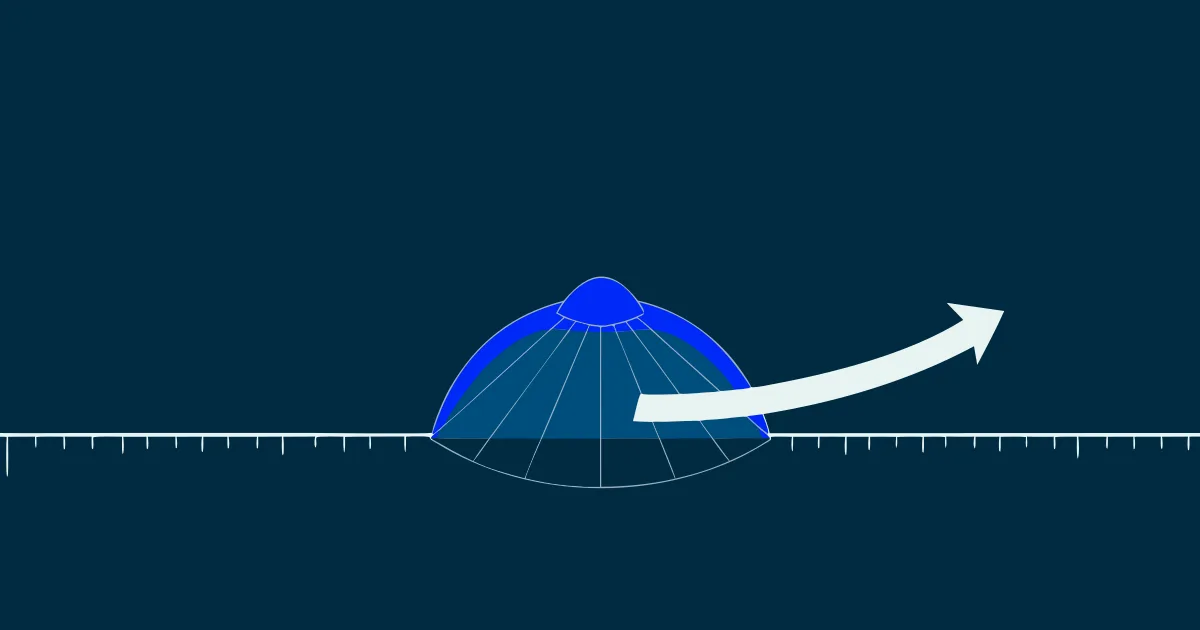
When you had RK, radial incisions were made in your cornea to flatten its central curvature. This reduced your nearsightedness by changing the way your cornea bends light. At the time of surgery, the degree of flattening was calibrated to give you good distance vision.
The problem is that the cornea does not stay put. The radial incisions create permanent structural weak points — zones where the cornea's normal architecture has been altered. Over decades, the forces of intraocular pressure (the fluid pressure inside your eye) and normal aging continue to act on these weakened areas. The cornea gradually flattens further and further beyond where it was immediately post-surgery.
The result: you are becoming progressively more farsighted (hyperopic) over time. Many RK patients who were -5.00 diopters nearsighted before surgery are now +2.00, +3.00, or even more farsighted — decades later. Some are still shifting.
How Fast Does Hyperopic Shift Progress?
Studies on long-term RK outcomes show that hyperopic shift is common and ongoing. Research published in the Journal of Refractive Surgery found that many patients experience continued refractive change for 10, 15, and even 20+ years after their RK procedure. The PERK (Prospective Evaluation of Radial Keratotomy) study — the most comprehensive long-term study of RK outcomes, published in Archives of Ophthalmology — found that roughly 43% of patients experienced a hyperopic shift of 1.00 diopter or more over a 10-year follow-up period. A 5-year PERK interim report established that the shift begins early and continues progressively.
The rate varies significantly between patients. Some stabilize after 5–10 years. Others continue shifting well into their 60s and 70s. There is currently no way to reliably predict which course any individual patient will take.
Why Glasses Cannot Keep Up
Glasses can correct the hyperopia — up to a point. But there are two reasons they are increasingly inadequate for post-RK patients as the years go on:
1. The prescription keeps changing. If your refraction shifts by half a diopter per year, you are perpetually wearing a prescription that is behind the curve. By the time your glasses feel "off," you are already due for another update. Many RK patients find themselves at the optometrist every 6–12 months, spending money on new glasses that are only marginally better than the ones they replace.
2. The irregular astigmatism cannot be corrected with glasses. The RK incision pattern does not just change your spherical power — it creates irregular astigmatism that glasses cannot address. Even with the best possible sphero-cylindrical prescription, the irregular zones of your cornea are not corrected. This leaves a layer of optical blur that no glasses can remove, regardless of how accurately the prescription is measured.
Why the Problem Gets Worse at Near Distance Too
As you age, you are also losing the natural focusing ability of your crystalline lens — a process called presbyopia that affects everyone, typically starting in the mid-40s. For a person with a normal cornea, reading glasses or progressive lenses address this adequately.
For an RK patient, presbyopia compounds the hyperopic shift in a particularly difficult way. Your distance vision is already compromised by irregular astigmatism and shifting refraction. Adding the progressive loss of near focusing on top of that creates a situation where no single glasses prescription works well at any distance. Many RK patients in their 50s and 60s find themselves in a frustrating position where they need multiple pairs of glasses and are dissatisfied with all of them.
LASIK Enhancement Is Usually Not an Option
Some patients wonder whether LASIK could be used to enhance their RK outcome and correct the hyperopic shift. The answer, for most RK patients, is no — and attempting it would be risky.
RK has already significantly thinned and structurally weakened the cornea. LASIK involves cutting a flap in the cornea and using a laser to remove additional tissue. On an already-weakened RK cornea, this creates an unacceptable risk of corneal ectasia — a progressive bulging and thinning of the cornea that can severely compromise vision. Most corneal surgeons will not perform LASIK on a post-RK cornea for this reason.
What Actually Helps: Scleral Lenses
For the majority of RK patients dealing with progressive hyperopic shift and irregular astigmatism, scleral contact lenses are the most effective vision correction solution available.
Here is why scleral lenses address both problems simultaneously:
- They correct the irregular astigmatism — by vaulting completely over the cornea and filling the space with sterile saline, scleral lenses create a perfectly smooth optical surface regardless of what your RK cornea looks like underneath. The irregular zones become irrelevant.
- They correct the hyperopia — the front surface of the scleral lens is manufactured to the precise prescription you need, including any regular astigmatism and the spherical correction for your current hyperopic refraction.
- They can be updated as refraction shifts — unlike LASIK or surgical options, scleral lens prescriptions can be updated as your hyperopic shift continues. New lenses are ordered with the updated parameters; no surgery required.
- They do not touch the RK incisions — the vault design keeps the lens away from the scarred corneal tissue, reducing inflammation and infection risk at the wound sites.
What About Cataract Surgery?
Many RK patients are now reaching the age where cataracts become relevant. Cataract surgery replaces the clouded crystalline lens with an artificial intraocular lens (IOL). For most people, this also corrects their distance vision substantially.
For RK patients, cataract surgery is more complicated. The IOL power calculation relies on corneal measurements — and those measurements are notoriously unreliable on an RK cornea. This makes it harder for surgeons to choose the correct IOL power, and outcomes are less predictable than in non-RK eyes. Post-operative glasses correction is almost always needed. Many post-cataract RK patients still benefit from scleral lenses for their remaining irregular astigmatism.
If you are considering cataract surgery, it is worth working with a corneal specialist who has extensive experience with post-RK eyes. The IOL power calculation requires specialized formulas designed for corneas that have been surgically altered.
Getting Help
If your post-RK vision has been frustrating you — whether it is the constant prescription changes, the blur that glasses never quite fix, or the diurnal fluctuation that makes mornings difficult — we encourage you to schedule a specialty consultation.
At EyeCare Center OC, Dr. Bonakdar has fitted over 500 scleral lenses including many patients with complex post-RK corneas. We use corneal topography to map the exact surface of your cornea and design a fitting approach matched to your unique situation.
Call (949) 323-3600 or visit our post-surgical vision page to learn more about your options.
References
- Waring GO 3rd, et al. Results of the Prospective Evaluation of Radial Keratotomy (PERK) Study 10 years after surgery. Arch Ophthalmol. 1994;112(10):1298–1308.
- Waring GO 3rd, et al. Results of the Prospective Evaluation of Radial Keratotomy (PERK) Study one year after surgery. Ophthalmology. 1985;92(2):177–198. (PERK 5-year interim data establishes early progressive shift)
- American Academy of Ophthalmology. What Is Radial Keratotomy? AAO Eye Health.
- American Academy of Ophthalmology. Cataract Surgery. AAO Eye Health. (IOL calculation challenges in post-RK eyes)
Learn how scleral lenses give post-RK eyes a stable optical surface.
Medical Disclaimer: This content is for informational and educational purposes only and is not intended as medical advice, diagnosis, or treatment. Individual outcomes after radial keratotomy vary. Scleral lens fitting results and suitability depend on individual corneal health, which should be assessed by a qualified eye care professional. Always consult a licensed optometrist or ophthalmologist before making decisions about your vision care. If you experience sudden vision loss, eye pain, or trauma, seek emergency eye care immediately.
¿Tiene preguntas sobre su salud visual?
El Dr. Alexander Bonakdar y su equipo están aquí para ayudarle. Agende una consulta para hablar sobre sus necesidades específicas.