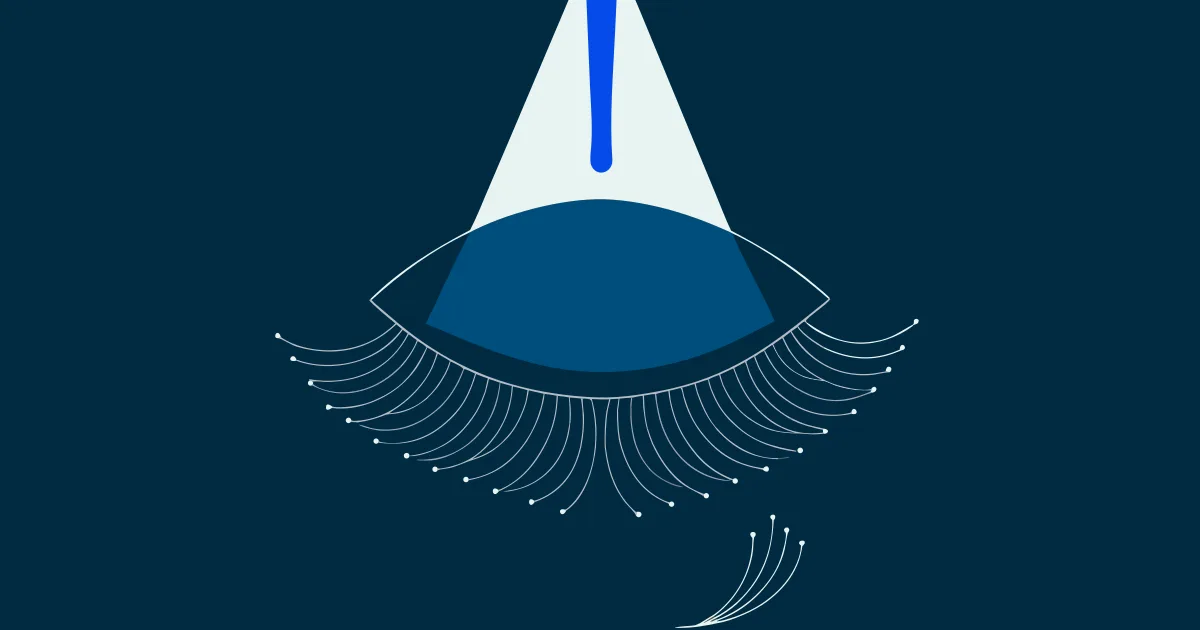
If you've had IPL (Intense Pulsed Light) treatment for dry eyes and noticed some eyelash loss afterward, you're probably feeling concerned. The good news? Your lashes will almost certainly grow back. This guide explains why lash loss sometimes happens during IPL, what the recovery timeline looks like, and which products can safely support regrowth.
What Is IPL Treatment and Why Is It Used for Dry Eyes?
IPL therapy has become a popular option for people suffering from chronic dry eye disease. If you've tried artificial tears, warm compresses, and prescription drops without lasting relief, your eye doctor may have recommended IPL as the next step.
How IPL Helps Dry Eyes
Your eyelids contain small oil glands called Meibomian glands. These glands produce the oily outer layer of your tear film—the part that keeps your tears from evaporating too fast. When these glands become clogged or inflamed, you develop Meibomian Gland Dysfunction (MGD), one of the leading causes of dry eye symptoms.
IPL treatment works by:
- Reducing inflammation along the eyelid margin
- Targeting tiny blood vessels that carry inflammatory signals
- Improving blood flow to help glands function normally
- Providing longer-lasting relief than drops alone
For many patients, IPL offers meaningful improvement when other treatments have fallen short.
Why Does IPL Sometimes Cause Eyelash Loss?
During IPL treatment, a special conductive gel is applied to your skin. This gel helps the light energy penetrate to the right depth. Occasionally, this gel can lead to unintended lash loss.
How the Gel Affects Your Lashes
Normally, light bounces off your eyelashes without causing harm. However, when conductive gel coats the lashes, it changes this interaction. The gel directs light energy into the hair shaft instead of letting it scatter away.
Your eyelashes contain melanin, the natural pigment that gives hair its color. When IPL energy reaches this melanin, heat builds up in the hair follicle. If the temperature rises high enough, the lash may shed.
What You Should Know
This type of lash loss is:
- Usually temporary rather than permanent
- Not common with careful technique
- Recoverable thanks to your follicles' natural regeneration ability
The energy levels used for dry eye treatment are much lower than those used for intentional hair removal, which means the deeper parts of your follicles typically remain intact.
Will My Eyelashes Grow Back? The Lash Growth Cycle Explained
Your eyelashes follow a predictable growth pattern that actually works in your favor during recovery. Unlike scalp hair, which can grow for years, eyelashes cycle through their phases much faster.
The Three Phases of Eyelash Growth
1. Anagen (Growth Phase)
- Duration: 4 to 10 weeks
- About 60-80% of lashes are in this phase at any time
- The lash is actively growing and has the most pigment
- Most susceptible to IPL energy
2. Catagen (Transition Phase)
- Duration: 2 to 3 weeks
- The lash stops growing and the follicle shrinks
- Less vulnerable to heat damage
3. Telogen (Resting Phase)
- Duration: 3 to 4 months
- The lash sits dormant before naturally shedding
- Least affected by IPL since there's minimal pigment activity
- A new lash is already forming underneath
Expected Recovery Timeline
| Timeframe | What to Expect |
|---|---|
| Week 0-2 | Damaged lashes shed; possible mild redness along the lid |
| Week 4-6 | New lashes begin emerging from follicles |
| Week 8-12 | Lashes reach 50-75% of original length and density |
| Week 12-16 | Full recovery for most people |
The key point: As long as the stem cells at the base of your follicles weren't destroyed—which is uncommon with standard dry eye IPL settings—your lashes will return.
Comparing Lash Serums: RevitaLash vs Rodan + Fields Lash Boost
Many people want to accelerate the regrowth process. Lash serums are popular, but if you have dry eye disease, you need to choose carefully. Here's how the two most-asked-about products compare.
Rodan + Fields Lash Boost
Active Ingredient: Isopropyl Cloprostenate (a prostaglandin analog)
How It Works: This ingredient extends the growth phase of your lashes, allowing them to grow longer before naturally shedding. It also signals resting follicles to start producing new lashes.
Considerations for Dry Eye Patients:
- Prostaglandins can promote inflammation
- May affect the oil glands that IPL was designed to help
- Thinner formula with higher chance of migrating into the eye
- Some users report irritation and redness
RevitaLash Advanced
Active Ingredient: Dechloro Dihydroxy Difluoro Ethylcloprostenolamide (also a prostaglandin analog)
How It Works: Similar growth-stimulating action, but this product was developed by an ophthalmologist with eye health in mind.
Advantages for Dry Eye Patients:
- Contains thickening agents so it stays where you apply it
- Includes soothing botanicals like calendula and ginseng
- Added biotin and peptides to strengthen lash fibers
- Generally better tolerated around sensitive eyes
Side-by-Side Comparison
| Feature | Lash Boost | RevitaLash Advanced |
|---|---|---|
| Developer background | Dermatology-focused | Ophthalmologist-created |
| Soothing botanicals | Limited | Yes (ginseng, calendula) |
| Risk of eye migration | Higher | Lower (thicker formula) |
| Strengthening ingredients | Basic | BioPeptin Complex |
| Price point | Mid-range | Premium |
Recommendation: For someone recovering from IPL dry eye treatment, RevitaLash Advanced is the better choice due to its formulation designed with eye health in mind.
Understanding Prostaglandin Risks
Both products mentioned above contain prostaglandin analogs—ingredients related to those in prescription glaucoma medications. While effective for lash growth, they carry potential side effects worth knowing about.
Possible Side Effects
- Eyelid skin darkening – Usually fades after stopping the product
- Deepening of the upper eyelid crease – Caused by fat changes around the eye
- Iris color changes – Rare but potentially permanent in light-colored eyes
- Potential effects on oil glands – Could counteract your dry eye treatment benefits
If you notice darkening skin, a sunken appearance around your eyes, or worsening dry eye symptoms, stop using the product and consult your eye doctor.
Prostaglandin-Free Alternatives
If the risks above concern you, consider peptide-based lash serums. These products work through different pathways and don't carry the same hormonal effects.
Popular Peptide Options
- Vegamour GRO Lash Serum – Plant-based formula using mung bean and red clover extracts
- Grande Lash MD – Contains amino acids and peptides for growth support
- Olaplex Lashbond Building Serum – Focuses on repairing and strengthening damaged lashes
These products typically show results more gradually but are considered gentler for people with ongoing eye conditions.
Your 4-Step Recovery Plan
Here's a practical approach to support healthy lash regrowth after IPL:
Step 1: Keep It Simple (Weeks 1-4)
- Clean your eyelids gently with an oil-free cleanser
- Avoid rubbing or touching your eye area
- Continue your prescribed dry eye treatments
- Expect some shedding in the first two weeks—this is normal
Step 2: Support Growth From Within
These nutrients help build healthy lashes:
- Biotin (Vitamin B7) – Supports keratin production
- Omega-3 fatty acids – Benefits both lashes and your oil glands
- Vitamins A, C, and E – Antioxidants that protect follicle health
Step 3: Choose Products Carefully (After Week 4)
If you decide to use a lash serum:
- Gentlest option: Peptide-based serum without prostaglandins
- Effective option: RevitaLash Advanced with close monitoring
- Watch for: Redness, irritation, skin darkening, or dry eye flare-ups
Step 4: Follow Up With Your Eye Doctor
Schedule a check-in around 4-6 weeks to:
- Track your lash regrowth progress
- Confirm your dry eye treatment remains effective
- Discuss any product reactions or concerns
Frequently Asked Questions
How long until my lashes fully grow back after IPL?
Most people see complete recovery within 12 to 16 weeks. New lashes typically start appearing around weeks 4-6, with noticeable improvement by week 8-12.
Can IPL cause permanent eyelash loss?
Permanent loss is very rare with standard dry eye IPL protocols. The energy levels used are generally too low to destroy the follicle stem cells responsible for regrowth.
When can I wear mascara again?
Wait until any irritation has cleared, usually 1-2 weeks. Choose a gentle, hypoallergenic formula and remove it carefully each night to avoid stressing new lashes.
Should I skip my next IPL session?
Not necessarily. Discuss what happened with your eye doctor so they can take extra care to keep gel away from your lashes during future treatments.
Are lash extensions okay during recovery?
It's best to wait until your natural lashes have fully returned. Extensions add weight and require adhesives that could irritate recovering follicles.
Which lash serum is safest for dry eye patients?
Peptide-based serums like Vegamour GRO are the gentlest choice. If you prefer faster results, RevitaLash Advanced is better formulated for sensitive eyes than most alternatives.
Key Takeaways
Eyelash loss after IPL dry eye treatment is uncommon but understandably concerning when it happens. The important points to remember:
- Recovery is expected within 12-16 weeks for most people
- Follicle stem cells are typically preserved at standard dry eye energy levels
- RevitaLash Advanced is the better-formulated prostaglandin option
- Peptide serums offer a gentler alternative with fewer risks
- Communication with your eye doctor ensures your dry eye treatment stays on track
Your lashes are resilient. With patience and proper care, you can expect them to return to normal while continuing to benefit from your dry eye treatment.
Disclaimer: This article is for informational purposes only and does not constitute medical advice. Always consult with your eye care professional before starting any new treatment or product.
Doctor-Recommended Dry Eye Products
Shop preservative-free artificial tears, lid hygiene products, and warm compress masks at our online store.
Shop DryEyeLA Products →Have Questions About Your Eye Health?
Dr. Alexander Bonakdar and his team are here to help. Schedule a consultation to discuss your specific needs.