Finally, Real Relief from Dry Eyes
Drops not working? You're not alone. We treat the root cause of your dry eye—not just the symptoms. Our advanced treatments provide lasting relief so you can see and feel better.
Why Do Your Eyes Feel Dry?
Dry eye isn't just about not making enough tears. Most cases (86%) are caused by blocked oil glands in your eyelids.
Aqueous Deficient
Your lacrimal glands don't produce enough tears. The tear film is too thin, causing rapid evaporation and irritation.
- Sjögren's syndrome (autoimmune)
- Age-related gland decline
- Medications (antihistamines, antidepressants)
- Diabetes
- Radiation to head/neck
10-15% of dry eye cases
Evaporative (MGD)
Tears evaporate too quickly because the oil layer is deficient. Meibomian gland dysfunction is the #1 cause.
- MGD — 86% of dry eye cases
- Blepharitis / lid inflammation
- Low blink rate (screens)
- Contact lens wear
- Environment (wind, AC, heating)
Most common — 86% involves MGD
Learn about MGD →Mixed Dry Eye
Most patients have both aqueous deficiency and evaporative dysfunction. A single treatment rarely works — you need a multi-targeted approach.
- Combined aqueous + evaporative
- Hormonal changes (menopause)
- Goblet cell deficiency (mucin layer)
- Chronic untreated dry eye
80%+ of patients
Neuropathic Dry Eye
Corneal nerve damage reduces sensation and disrupts the tear reflex. Eyes feel dry but may show minimal clinical signs — often missed on standard exams.
- Post-LASIK / post-PRK
- Post-cataract surgery
- Herpes simplex/zoster keratitis
- Diabetes (neuropathy)
- Neurotrophic keratitis
Often undiagnosed
Post-LASIK dry eye →Classification based on TFOS DEWS II Report (Craig et al., The Ocular Surface, 2017) and AAO Dry Eye Syndrome PPP 2024
MGDx Meibography: See Your Glands Before They're Gone
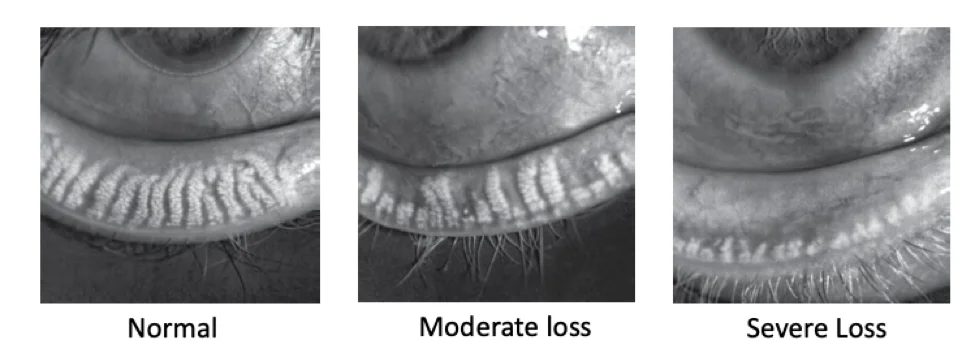
We use MGDx meibography — an advanced infrared imaging system that photographs your meibomian glands through the eyelid. This non-invasive scan reveals the exact structure, health, and atrophy level of each gland in seconds.
Why it matters: meibomian glands cannot regenerate once lost. By the time you feel symptoms, significant gland dropout may have already occurred. Meibography catches atrophy early — often years before symptoms appear — so treatment can begin before permanent damage.
- Visualizes all meibomian glands in both upper and lower lids
- Grades gland loss from Stage 1 (mild) to Stage 4 (severe atrophy)
- Tracks treatment progress over time with before/after comparison
- Painless, non-contact — takes less than 60 seconds
Included in every dry eye evaluation at EyeCare Center OC.
We Identify Your Root Cause
Our comprehensive dry eye evaluation uses advanced imaging to see your meibomian glands, measure tear quality, and determine exactly why your eyes are dry—so we can treat the cause, not just the symptoms.
Severity-Based Treatment Approach
Treatment intensity matches your disease severity. We start conservative and escalate based on your response — following the AAO Preferred Practice Pattern guidelines.
Symptoms
- Occasional dryness after screen use
- Mild burning or grittiness
- Symptoms resolve with rest
- Intermittent blurred vision
Treatment
- Preservative-free artificial tears
- Warm compresses + lid massage (2x daily)
- Omega-3 supplements (2,000–3,000mg)
- Screen breaks + humidifier
Symptoms
- Daily discomfort affecting work
- Redness and light sensitivity
- OTC drops not helping
- Blurred vision that fluctuates
Treatment
Everything in Mild, PLUS:
- Rx drops (Restasis, Xiidra, Cequa)
- IPL treatment
- Low-Level Light Therapy (LLLT)
- Punctal plugs to retain tears
- BlephEx lid debridement
Symptoms
- Constant pain and burning
- Corneal damage or erosions
- Unable to wear contacts
- Significant vision impairment
Treatment
Everything in Moderate, PLUS:
- Intensified IPL series + maintenance
- Autologous serum tears
- Scleral lenses for surface protection
- Amniotic membrane therapy
- Meibomian gland probing
Even mild symptoms deserve evaluation. Meibomian glands atrophy silently — by the time symptoms become moderate, significant gland loss may have already occurred. Early intervention preserves gland function.
Treatment approach based on AAO Dry Eye Syndrome Preferred Practice Pattern 2024
Advanced Dry Eye Treatments
We offer the full modern range, from a free blink exercise to the newest FDA-approved prescriptions and in-office procedures, so we can treat the actual cause of your symptoms.
IPL Therapy
Intense Pulsed Light
Light-based treatment that reduces inflammation, kills bacteria, and melts clogged oil in your glands. Series of 4 treatments for optimal results.
- Treats root cause of MGD
- Long-lasting results
- No downtime
BlephEx
Lid Margin Debridement
Medical-grade cleaning of your eyelid margins to remove debris, bacteria, and biofilm that contribute to inflammation.
- Immediate improvement
- Treats blepharitis
- Quick procedure
LLLT (Red Light)
Low-Level Light Therapy
Non-invasive light therapy that reduces inflammation, stimulates cellular repair, and helps treat styes without surgery.
- 100% non-invasive
- Treats chalazions
- Reduces inflammation
Gland Expression
Manual Clearing
Therapeutic expression of meibomian glands to physically clear blockages after heating. Often combined with other treatments.
- Immediate results
- Diagnostic feedback
- Complements heating
Amniotic Membrane
Surface Healing Device
A clear disc of amniotic tissue placed on the eye like a large contact lens. It calms inflammation and repairs a damaged cornea within days. We use devices such as Prokera for severe surface disease.
- Repairs a damaged cornea
- Strong anti-inflammatory effect
- Worn a few days, then removed
Scleral Lenses for Dry Eye
All-Day Fluid Reservoir
A large lens that vaults over the cornea and holds a pool of sterile saline against it all day. For severe dry eye this is often the only thing that gives comfort from morning to night.
- Constant moisture for 10+ hours
- Sharpens vision at the same time
- For severe or resistant dry eye
Blink Training
Complete Blink Exercises
Screen work cuts your blink rate by more than half, and many of those blinks never fully close. The lower glands then never release their oil. We teach a short daily exercise that restores a full blink.
- Free, done at home
- Targets screen-related dryness
- Makes every other treatment work better
Miebo
Perfluorohexyloctane
An FDA-approved drop that forms a thin layer across the tear film and slows evaporation. It treats the cause of evaporative dry eye instead of only adding moisture.
- FDA approved 2023
- Preservative-free and water-free
- Built for evaporative dry eye
Tyrvaya
Nasal Tear Spray
A nasal spray, not an eye drop. It stimulates the nerve pathway that makes your own natural tears, so you produce a complete tear film rather than an artificial one.
- Nothing goes in the eye
- Makes your own natural tears
- Good option if drops sting
XDEMVY
Demodex Blepharitis
The first FDA-approved drop that kills Demodex mites. These mites live at the lash roots and cause many stubborn cases of crusty, itchy lids that lid scrubs alone never clear.
- Kills the mite, not just the debris
- Fixed 6-week course
- Pairs with BlephEx cleaning
Autologous Serum Tears
Made From Your Own Blood
Drops made from your own blood serum. They carry the growth factors and vitamins that natural tears have and artificial tears do not. We reserve these for severe cases that standard drops cannot control.
- For severe, resistant dry eye
- Helps the eye surface heal
- No preservatives
Customized Drops
Prescription Therapy
When inflammation drives your dry eye, we prescribe drops such as Restasis, Xiidra, or Cequa to calm it and raise your own tear production.
- Daily use at home
- Targets aqueous deficiency
- Reduces inflammation
Meibomian Gland Dysfunction Specialists
MGD is the #1 cause of dry eye. When your oil glands get blocked, your tears evaporate too quickly, leaving your eyes dry, irritated, and uncomfortable.
Do You Have MGD?
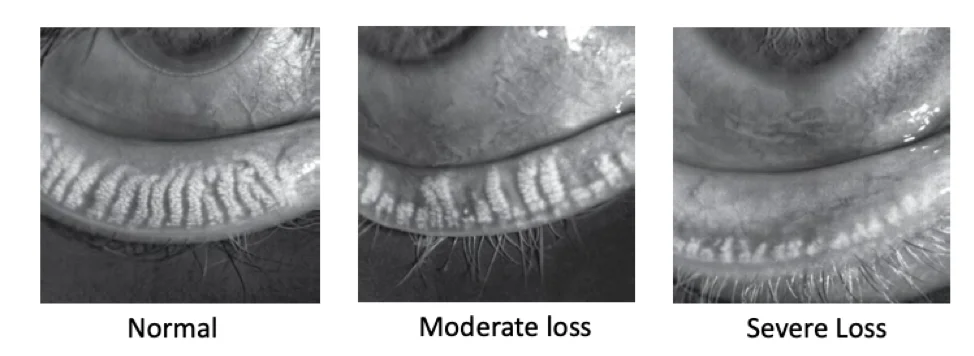
Meibomian glands cannot regenerate
Once glands atrophy from chronic blockage, they are lost permanently. This is why early, aggressive treatment is essential — not just warm compresses and drops.
Our MGD Treatment Protocol
We use a progressive treatment approach based on severity — starting with at-home therapies and advancing to in-office procedures when needed.
At-Home Foundation: Warm Compresses, Lid Massage & Omega-3
Every MGD treatment plan starts with consistent at-home care. Warm compresses (10 minutes, twice daily using a microwavable mask) soften the solidified oils in blocked meibomian glands. Immediately follow with gentle lid massage — pressing down on the upper lid and up on the lower lid toward the lash line to express the warmed oil.
High-dose omega-3 fatty acids (EPA/DHA, 2,000-3,000mg daily from re-esterified triglyceride form) are clinically recommended to improve meibum lipid quality and reduce eyelid inflammation. The Dry Eye Assessment and Management (DREAM) Study Group and subsequent meta-analyses confirm omega-3 supplementation improves tear breakup time and reduces ocular surface disease symptoms.
Important: Warm compresses alone provide only 20-40% improvement (Dell et al., 2017). While essential as a foundation, most patients with moderate-to-severe MGD require in-office treatments for meaningful, lasting relief.
Low-Level Light Therapy (LLLT) — Photobiomodulation
LLLT uses specific wavelengths of red and near-infrared light (590-700nm) delivered via the Marco Equinox mask to stimulate cellular energy production in the meibomian glands. It is 100% non-invasive, painless, and requires no numbing or recovery time.
How LLLT Works
- Photobiomodulation — light energy absorbed by cytochrome c oxidase in mitochondria increases ATP production, stimulating gland function
- Gentle heating — warms glands from inside out, liquefying thickened meibum without the discomfort of external heat
- Inflammation reduction — downregulates pro-inflammatory cytokines (IL-6, TNF-α) in the eyelid tissue
- Treats styes/chalazions — can resolve early-stage lid lumps without surgical incision
Clinical Evidence for LLLT
- Significant improvement in TBUT, OSDI scores, meibum quality, and tear meniscus height (Antwi et al., 2024)
- SPEED score decrease significantly greater with LLLT vs. IPL alone (Park et al., 2023)
- 95.6% of patients saw significant OSDI reduction with combined IPL+LLLT (Stonecipher et al., 2021)
- Meibum expressibility improved and maintained at final follow-up with LLLT alone (Fineide et al., 2025)
Our protocol: LLLT is used as both a standalone treatment for mild-moderate MGD and as a synergistic adjunct to IPL therapy. When combined with IPL, LLLT is performed immediately before or after the IPL session to maximize gland response.
IPL (Intense Pulsed Light) — The Gold Standard for MGD
Most EffectiveIPL is the most studied and most effective in-office treatment for meibomian gland dysfunction. Unlike LipiFlow, which only applies heat and pressure to express old oil, IPL treats the root cause of MGD — chronic inflammation.
Why IPL Is Superior to LipiFlow
- Inflammation control: IPL targets abnormal blood vessels (telangiectasia) along the lid margin that fuel chronic inflammation. By closing these vessels, IPL breaks the inflammatory cycle that causes gland obstruction.
- Bacterial & Demodex elimination: The light energy destroys bacteria and Demodex mites on the lid margin — both major contributors to posterior blepharitis and MGD.
- Meibum liquefaction: Heat from IPL pulses softens solidified meibum deep within the glands, restoring natural oil flow.
- Collagen remodeling: Stimulates fibroblast activity and new collagen formation in periocular tissue, improving overall lid health.
LipiFlow limitation: LipiFlow only applies vectored thermal pulsation to mechanically express blocked meibum. It does not address the underlying inflammation, bacteria, or vascular abnormalities that cause glands to re-block. This is why LipiFlow results often diminish within 6-12 months while IPL provides longer-lasting improvement.
IPL Treatment Schedule
Initial Series: 4 treatments
Spaced 2-4 weeks apart. Most patients notice improvement by session 3.
Maintenance: Every 6 months
After initial series, maintenance treatments every 6 months sustain results long-term.
Clinical Evidence
- 87% improvement in MGD signs after IPL series (Dell et al., 2017)
- IPL+MGX improved TBUT from 4.0s → 6.0s vs. MGX alone 3.8s → 4.5s (Hagen et al., 2022)
- IPL effective with or without expression (systematic review, 2024)
- IPL superior TBUT + SPEED improvement vs. LipiFlow in network meta-analysis (2025 meta-analysis)
- Safe, effective on upper and lower eyelids across multicenter study (Albietz et al., 2023)
Our recommendation: For moderate-to-severe MGD, we recommend a series of 4 IPL sessions combined with LLLT and meibomian gland expression, followed by maintenance every 6 months. This combined approach delivers the most comprehensive and longest-lasting relief.
IPL vs. LipiFlow: How They Compare
| Feature | IPL Therapy | LipiFlow |
|---|---|---|
| Mechanism | Anti-inflammatory + heat + bacterial elimination | Heat + mechanical pressure only |
| Treats inflammation | ||
| Kills bacteria/Demodex | ||
| Closes abnormal vessels | ||
| Expresses glands | ||
| Sessions needed | 4 initial + maintenance | 1 session (repeat if needed) |
| Duration of results | 6-12+ months with maintenance | 6-12 months (often diminishes) |
| TBUT improvement | Superior (meta-analysis 2025) | Significant |
Source: Network meta-analysis of 12 RCTs, 969 patients (PubMed, 2025)
Understanding Dry Eye Treatment
Dr. Bonakdar explains the latest dry eye treatments and how we can help you find relief.

IPL for Dry Eye — Treating the cause of evaporative dry eye with light
Treating the cause of evaporative dry eye with light.

Treating Dry Eye — There is a lot that can be done
There is a lot that can be done.
Dry Eye Success Stories
Real patients who finally found relief from chronic dry eye
Jennifer K.
Age 52
"I tried every drop on the market for years. After just 3 IPL treatments, I finally have relief. I can wear makeup again without my eyes burning!"
Outcome:
80% symptom reduction, returned to contact lens wear
Robert M.
Age 61
"Working from home was torture for my eyes. After treatment and some lifestyle changes Dr. B recommended, I can finally work comfortably again."
Outcome:
SPEED score improved from 18 to 5, able to work 8+ hours
Maria G.
Age 45
"My eyes would crust over every morning. Now I wake up with comfortable eyes. The IPL treatment was so easy and made such a difference!"
Outcome:
Morning crusting eliminated, TBUT improved from 3s to 9s
* Patient names abbreviated for privacy. Results may vary. Individual outcomes depend on various factors.
Frequently Asked Questions
Why aren't my eye drops working?
Most over-the-counter drops only add moisture temporarily—they don't address why your eyes are dry. If your meibomian glands are blocked (the case for 86% of dry eye patients), you need treatment to clear those glands. That's what our advanced treatments like IPL and red light therapy do.
What is IPL and how does it help dry eye?
IPL (Intense Pulsed Light) is a light-based treatment that targets the blood vessels and inflammation around your eyelids. It reduces redness, kills bacteria including Demodex mites, and helps melt the thickened oil in your glands. Most patients need 4 treatments spaced 2-4 weeks apart.
Is IPL treatment painful?
Most patients describe IPL as very comfortable—like a warm sensation on the skin. We apply a cooling gel and protective shields over your eyes. There's no downtime, and you can return to normal activities immediately.
How long do dry eye treatments last?
Results vary by treatment. IPL typically provides relief for 6-12 months. Prescription treatments such as Miebo work for as long as you keep using them. Many patients maintain their results with periodic maintenance treatments and proper home care.
Why do you use IPL instead of LipiFlow?
LipiFlow applies heat and pressure from inside the eyelid to squeeze blocked glands in one session. IPL uses light energy from outside to reduce the inflammation that makes the glands block in the first place. We use IPL because treating that inflammation is what makes the results last — heat and pressure alone wear off as the glands re-block.
Can I wear contacts if I have dry eye?
Often, yes! Once we treat your underlying dry eye condition, many patients can return to comfortable contact lens wear. For severe cases, specialty lenses like scleral contacts provide a moisture reservoir that keeps the eye hydrated all day.
How much does dry eye treatment cost?
Costs vary by treatment. A dry eye evaluation is typically covered by medical insurance, but IPL treatment itself is elective and not covered — usually $400-800 per session (packages available). We accept FSA/HSA and offer CareCredit financing.
Do I need a referral for dry eye treatment?
No referral is needed. You can schedule a dry eye evaluation directly with us. We'll perform a comprehensive assessment and discuss all treatment options with you.
Stop Suffering from Dry Eyes
You don't have to live with burning, irritated eyes. Schedule your comprehensive dry eye evaluation and discover what's really causing your symptoms.
Schedule Your Dry Eye Treatment Consultation
Fill out the form below and our team will contact you to confirm your appointment. Or call us directly at (949) 323-3600