
Keratoconus Treatment in Seal Beach, California
Keratoconus — At a Glance
Severity & Type
When to See a Doctor
Schedule an appointment promptly. Early treatment significantly improves outcomes.
Key Symptoms
- Blurred or distorted vision that glasses no longer correct
- Ghosting, doubling or streaking of light
- Frequent prescription changes
- Increased sensitivity to light and glare
- Halos and starbursts around headlights at night
Treatment Options
- Corneal Cross-Linking (CXL)
- Scleral Contact Lenses
- Custom OneFit Scleral Lenses
- Rigid Gas Permeable (RGP) Lenses
- Hybrid Contact Lenses
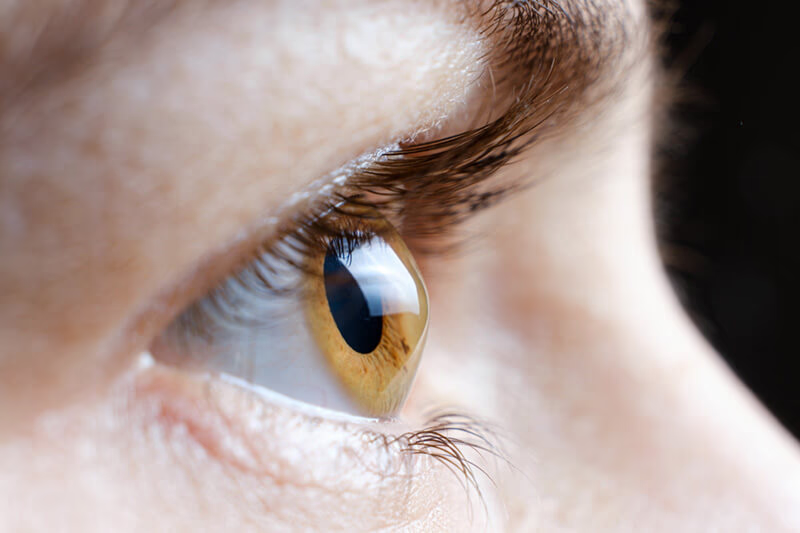
Keratoconus is a progressive corneal disease. The cornea — the clear front window of the eye — thins and bulges forward into a cone shape. That cone bends light unevenly, so vision becomes blurred, doubled and streaky, and glasses stop working well. Keratoconus usually starts in the teens or twenties and can keep changing into the forties. It is not blindness and it is not something you caused, but it does need watching, because the damage that has already happened cannot be undone. Two things matter: stopping the cone from getting worse, and getting your vision back. Corneal cross-linking does the first. Scleral and other specialty contact lenses do the second. Dr. Bonakdar has fitted more than 5,000 keratoconus and scleral lens patients in Orange County, including patients other practices could not fit.
Seal Beach's coastal conditions—salt air, UV exposure, and wind—can aggravate corneal conditions like keratoconus. Sand particles and ocean spray pose additional risks to compromised corneal tissue.
Looking for Specialized Keratoconus Care?
For comprehensive keratoconus care, visit our dedicated Keratoconus Center at keratocones.com.
Dr. Bonakdar on Keratoconus
Direct Answers from Dr. Bonakdar
Dr. Alexander Bonakdar at EyeCare Center of Orange County provides expert keratoconus diagnosis and treatment for patients in Seal Beach and throughout Orange County. With over 35 years of clinical experience and advanced diagnostic technology, each patient receives a personalized treatment plan based on their specific condition severity and lifestyle needs.
What is keratoconus?
Keratoconus is a condition where the clear front surface of your eye (the cornea) gradually thins and bulges into a cone shape. This distorts your vision, making things look blurry or wavy. It usually starts in the teenage years and progresses through your 20s and 30s.
Can keratoconus be cured?
Keratoconus cannot be completely cured, but it can be effectively managed. Corneal cross-linking is a procedure that strengthens the cornea and stops the disease from getting worse in over 95% of patients. Specialty lenses then restore clear vision.
What happens if keratoconus is not treated?
Without treatment, keratoconus typically gets worse over time. The cornea continues to thin and bulge, causing increasingly blurry vision that glasses cannot fix. In severe cases, corneal scarring develops, and a corneal transplant may become the only option to restore sight.
How is keratoconus diagnosed?
Keratoconus is diagnosed with a painless imaging test called corneal topography. This creates a detailed map of your cornea's shape, revealing any thinning or bulging. Your eye doctor may also measure corneal thickness with a pachymeter.
What are scleral lenses for keratoconus?
Scleral lenses are large-diameter contact lenses that rest on the white part of your eye instead of directly on the cornea. They create a smooth optical surface over the irregular cornea, providing sharp vision and all-day comfort for keratoconus patients.
What are the symptoms of Keratoconus?
Seal Beach residents may notice symptoms more acutely during outdoor activities—ocean glare, wind, and sand can amplify visual disturbances and discomfort:
- Blurred or distorted vision that glasses no longer correct
- Ghosting, doubling or streaking of light
- Frequent prescription changes
- Increased sensitivity to light and glare
- Halos and starbursts around headlights at night
- Difficulty driving after dark
- Eye strain and headaches from squinting
What happens if keratoconus is not treated?
Without proper diagnosis and treatment, keratoconus can lead to:
- Progressive corneal thinning leading to severe vision distortion
- Scarring of the cornea that cannot be corrected with glasses
- Need for corneal transplant surgery in advanced cases
- Inability to wear standard contact lenses
- Significant impact on driving, reading, and daily activities
- Potential legal blindness without intervention
How is Keratoconus treated?
For Seal Beach's coastal residents, we consider your active outdoor lifestyle when recommending treatments—ensuring solutions work for beach activities, water sports, and sun exposure:
Standard Care vs. Specialized Treatment for Keratoconus
| Aspect | Standard Approach | Specialized Treatment |
|---|---|---|
| Vision Correction | Glasses or soft contacts | Scleral lenses or corneal cross-linking |
| Disease Progression | Not addressed | Cross-linking halts progression in 95%+ cases |
| Comfort | Poor fit due to irregular cornea | Scleral lenses vault over cornea for comfort |
| Visual Clarity | Limited correction for irregular astigmatism | Crisp vision through fluid-filled lens system |
| Long-term Outcome | Continued deterioration likely | Stabilized cornea with preserved vision |
Keratoconus FAQs for Seal Beach Patients
Common questions from Seal Beach patients about our eye care services
Have more questions? Call us at (949) 323-3600
We don't take Medi-Cal
Keratoconus Care for Seal Beach Residents
For Seal Beach's coastal residents with keratoconus, we understand the unique challenges of managing this condition while enjoying beach activities. Our scleral lenses provide stable, clear vision even in windy, sandy conditions, and we offer UV-protective options for maximum outdoor protection.
About Seal Beach
Charming beach town with active senior community and surf culture
Population: 25,000+
Languages Spoken in Seal Beach
Our practice serves the diverse Seal Beach community. We provide care to patients who speak:
Eye Health Priorities for Seal Beach
- UV damage and photokeratitis from ocean glare
- Pterygium (surfer's eye) from wind and sun exposure
- Dry eye from salt air and coastal winds
- Sports vision needs for water activities
Conveniently Located Near Seal Beach Landmarks
Our Orange County practice is easily accessible for Seal Beach patients living near:
Getting to Our Office from Seal Beach
Seal Beach patients typically reach our Santa Ana office via the 22 Freeway in approximately 30 minutes. Free on-site parking is available in our building.
801 N Tustin Ave, Ste 404, Santa Ana, CA 92705 — Get DirectionsSeal Beach Neighborhoods We Serve
- Old Town Seal Beach
- Leisure World
- Surfside Colony
- Seal Beach Naval Weapons Station
Zip codes: 90740
Don't Delay Treatment for Keratoconus
Without timely care, keratoconus can lead to lasting visual impairment. Early diagnosis and treatment offer the best outcomes for Seal Beach patients.
Why Seal Beach Patients Choose EyeCare Center for Keratoconus
Corneal Specialty Practice
Dr. Bonakdar has 35+ years treating corneal conditions including keratoconus, with advanced slit lamp and topography diagnostics.
Scleral Lens Expertise
Custom scleral and specialty contact lens fittings for irregular corneas, dry eye, and post-surgical rehabilitation.
Same-Day Urgent Visits
Seal Beach patients with acute corneal symptoms can often be seen the same day for prompt diagnosis and treatment.
Coordinated Surgical Care
When corneal surgery is needed, we coordinate with top corneal surgeons and manage your complete pre- and post-operative care.

Your Keratoconus Specialist in Seal Beach
Dr. Alexander Bonakdar is a California-licensed Optometrist (O.D.) with over 35 years of experience treating keratoconus and complex eye conditions. A graduate of the Illinois College of Optometry, he has helped over 10,000 patients achieve and maintain clear vision.
Patient Stories from Seal Beach
See why your neighbors in Seal Beach trust us with their vision.
Comprehensive Exam
"Not a fan of getting my eyes checked but the receptionist and Dr. were very nice and eased my anxiety."
Comprehensive Exam
"I came back for my yearly visit and had a great experience as always."
Schedule Your Keratoconus Consultation
Expert diagnosis and treatment for Seal Beach and Orange County residents.