
Emergency Eye Doctor in Orange County
Same-Day & Saturday Appointments
Skip the ER — see an eye specialist in under 1 hour. We reserve same-day slots for corneal abrasions, foreign bodies, pink eye, sudden flashes and floaters, chemical exposure, and more.
A hospital ER isn't built for eye problems — you'll wait behind higher-priority cases and are usually seen by a general doctor with a penlight, not an eye specialist with a slit lamp. This page tells you exactly what to do right now, whether that's calling us, calling 911, or following the first-aid steps below while you dial.
*During regular business hours, based on current scheduling.
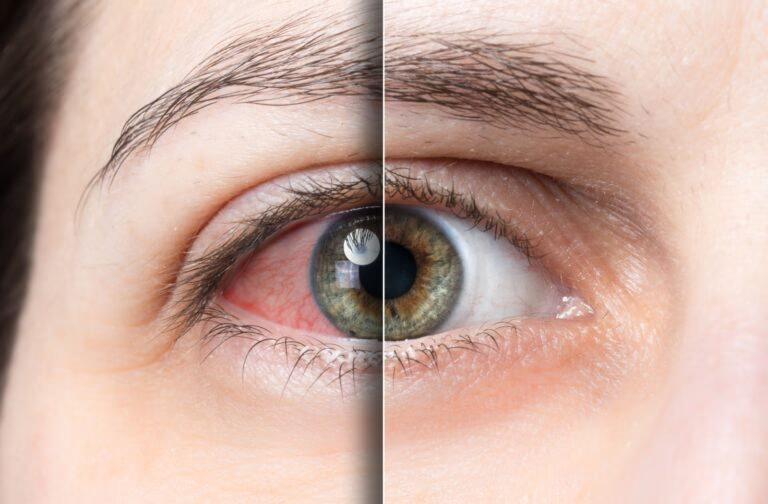
Don't Wait It Out
Same-day evaluation for eye pain, injury, and vision changes
Is This an Eye Emergency?
Not every eye problem needs the ER, and not every eye problem can wait. Use this guide to figure out what to do right now — then call.
Eye emergencies fall into three general categories: true life- or vision-threatening emergencies that need 911 or the ER, urgent conditions that need a specialist the same day, and uncomfortable-but-stable conditions that can wait for the next available appointment. This guide sorts common symptoms into those three tiers so you know exactly who to call first.
Call 911
This is a medical emergency — do not drive yourself
- Chemical splash in the eye (acid, alkali, cleaning products)
- A penetrating eye injury (something has pierced the eye)
- Eye symptoms combined with stroke signs — sudden vision loss with headache, weakness, or slurred speech
- A severe chemical or thermal burn to the eye or eyelid
- Sudden complete vision loss in one eye
These situations can threaten your vision or your life within minutes. An eye office — even a same-day one — cannot manage them safely. Call 911 or get to the nearest emergency room immediately, and do not attempt to drive yourself if your vision is affected.
Call 911Call Us Now — Same-Day
Urgent, but you have time to call before you go anywhere
- Sudden flashes of light or a new shower of floaters
- Sudden partial blur in one eye
- Severe eye pain
- A foreign body stuck in the eye that won’t flush out
- An eye swollen shut
- Blunt trauma to the eye (hit by a ball, fist, airbag, fall)
- A contact lens stuck in the eye, or signs of a corneal ulcer
These symptoms need a specialist exam today, not next week. Many of them — a sudden shower of floaters, a curtain across your vision, a stuck contact lens with pain and light sensitivity — can be early signs of a retinal problem or infection that gets harder to treat the longer it goes unaddressed. Call us and tell our team it is urgent; we hold slots for exactly this. When a condition requires surgical intervention, we coordinate same-day or next-day referral to a board-certified ophthalmologist.
Call (949) 775-0911Call Us Today
Uncomfortable, but not sight-threatening — still see us soon
- Pink eye / conjunctivitis
- A stye or chalazion
- Mild redness or irritation
- A scratchy or gritty feeling
- Watery eyes or discharge
- Subconjunctival hemorrhage (a broken blood vessel on the white of the eye)
These are the most common reasons people come in to see us, and most resolve quickly once treated correctly. They are rarely dangerous, but they are usually contagious, uncomfortable, or slow to heal without the right prescription — so "today" or "tomorrow" is the right window, not "whenever it fits my schedule."
Call (949) 775-0911When in doubt, call us. We would rather see you and confirm everything is fine than have you wait and risk permanent damage. Our front desk is trained to ask a few quick questions and route true emergencies straight to the doctor — you will never be told to "just wait and see" if what you describe sounds urgent.
What to Do Right Now
While you get us on the phone, here's exactly what to do — and what to avoid — for the three most common eye emergencies.
The first few minutes after an eye injury matter. Doing the right thing immediately — and avoiding a few common instincts, like rubbing or applying pressure — can meaningfully change how well the eye heals. None of this replaces being seen; it is meant to protect the eye in the time between the injury and your appointment.
- 1Start rinsing with clean water immediately — continue for a full 15 minutes, without stopping.
- 2Remove contact lenses if you can do so without further delaying rinsing.
- 3Don't rub the eye.
- 4Call us or call 911 immediately after rinsing — do not wait to see if it feels better.
Why this matters: Chemical injuries get worse the longer the chemical stays in contact with the eye. Rinsing dilutes and flushes it out, which is the single most important thing you can do before any doctor sees you — it can be the difference between a fully recoverable irritation and permanent corneal scarring.
- 1Don't rub or press on the eye.
- 2Blink several times — this sometimes clears loose debris on its own.
- 3Try gently flushing the eye with clean water.
- 4If it won't come out, cover the eye loosely and come see us right away.
- 5Don't try to remove anything that appears embedded in the eye — leave that to us.
Why this matters: Rubbing an eye with something loose in it can scratch the cornea and turn a minor annoyance into a corneal abrasion. If the object is embedded rather than loose, trying to remove it yourself risks pushing it deeper or tearing the surrounding tissue — we have magnification, proper lighting, and the right tools to remove it safely and check for hidden damage underneath.
- 1Don't touch or rub the eye.
- 2Don't apply pressure to the eye.
- 3Cover the eye loosely with a clean cloth.
- 4Don't take aspirin — it increases bleeding.
- 5Call us for a same-day appointment.
Why this matters: Blunt trauma can cause bleeding or swelling inside the eye that is not visible from the outside. Pressure or rubbing can increase that internal bleeding, and aspirin thins the blood further — which is why we ask you to avoid it and instead let a specialist check for hyphema, retinal damage, or an orbital fracture before assuming it is "just a bruise."
We Reserve Same-Day Slots for Eye Emergencies
Most patients are seen within 1 hour of calling.
Eye Doctor vs Emergency Room — Why We're the Better Choice
For most eye emergencies, a specialist with the right equipment beats a general ER doctor with a penlight — and it costs a lot less.
Emergency rooms are built to rule out life-threatening problems first — chest pain, strokes, major trauma. An eye complaint is rarely triaged as urgent there, which is why a scratched cornea or a stye can mean hours in a waiting room before anyone even looks at your eye. Most ERs also don't keep a slit lamp, OCT, or corneal topographer on hand, so the doctor who does see you is often working with the same penlight used to check your throat. Unless you have one of the true emergencies listed above — a chemical burn, penetrating injury, or stroke signs — a same-day eye specialist visit gets you a more accurate diagnosis, faster, for a fraction of the cost.
| Emergency Room | EyeCare Center OC | |
|---|---|---|
| Average Wait | 4+ hours | Under 1 hour |
| Cost | $2,200+ (national avg) | $150–$350 |
| Eye Specialist | Rarely — general ER doctor | Always — Dr. Alexander Bonakdar, 35+ years |
| Equipment | Basic penlight exam | Slit lamp, OCT, fundus camera, topography |
| Follow-Up | "See your eye doctor" | Built in — same doctor, same office |
| Weekend | Often 8+ hour wait | Saturday 9:00 AM - 1:00 PM |
There is also the question of what happens after the ER visit. Most emergency rooms will discharge you with instructions to "follow up with your eye doctor" — meaning you still need a second appointment to actually resolve the problem. When you come to us first, that follow-up is already built in: the same doctor who examines you today is the one who checks your healing progress next week, with your full history already on file.
A Real-World Comparison
Picture a Saturday afternoon: a splash of pool chlorine or a scratch from a child's toy leaves an eye red, watering, and painful. At an ER, that's a multi-hour wait behind chest pain and broken bones, a brief look with a penlight, a prescription, and a bill that can run into the thousands. Here, it's a same-day slot, a slit-lamp exam that actually shows the doctor the injury up close, a treatment plan started on the spot, and a bill closer to a few hundred dollars — often less after insurance.
Conditions We Treat Same-Day
Tap any condition below to see how we treat it and when you should come in. We diagnose and begin treatment for all conditions below — when surgery or advanced intervention is needed, we coordinate a prompt referral to a trusted ophthalmologist.
Extremely painful but usually heals in 2-3 days with treatment. We prescribe antibiotic drops and pain management.
A corneal abrasion typically feels like something is still in the eye even after the original object is gone, along with tearing, light sensitivity, and blurred vision. Common causes include fingernails, makeup brushes, tree branches, and paper edges. We stain the cornea with fluorescein dye under blue light to map the exact size and depth of the scratch before treating it.
Come in same-day — untreated scratches can become infected.
Metal shavings, wood chips, sand, or eyelashes embedded in the eye. We use specialized equipment to safely remove foreign bodies and check for corneal damage.
This is one of the most common workplace and DIY-project injuries we see — grinding metal, sawing wood, and yard work are frequent causes. Metal fragments can also leave a rust ring on the cornea that needs to be carefully removed after the fragment itself is out, which is not something a rinse at home can fix.
Don't try to remove it yourself.
Bacterial, viral, or allergic. We determine the type and prescribe the right treatment. Bacterial pink eye clears in 2-3 days with prescription drops.
The three types look similar but need different treatment — antibiotics for bacterial, supportive care for viral, and antihistamine drops for allergic. Using the wrong treatment (or an old prescription from a previous case) can prolong symptoms or mask a more serious infection, so an accurate diagnosis matters even for something this common.
Come in today — it's contagious.
Painful bumps on the eyelid. Most respond to warm compresses, but persistent or large ones need medical treatment.
A stye is an acute, painful infection at the eyelash line, while a chalazion is a slower-growing, usually painless blockage of an oil gland deeper in the lid. Both can look alarming, but most resolve with consistent warm compresses — we step in with in-office drainage or prescription treatment when they don't.
Come in if it's not improving after 48 hours or affecting your vision.
New flashes of light or a sudden increase in floaters can indicate retinal detachment — a medical emergency. We dilate and examine the retina same-day.
Occasional floaters are normal, especially as we age, but a sudden shower of new floaters, flashes of light in your peripheral vision, or a dark curtain moving across your field of view are classic warning signs of a retinal tear or detachment. A dilated exam is the only reliable way to tell the difference between "normal aging" and "needs surgery this week."
Don't wait on this one.
After rinsing for 15 minutes, come straight to us. We assess corneal damage and begin treatment immediately.
Household cleaners, pool chemicals, and cosmetic products are the most common causes we see. Alkali burns (from products like drain cleaner or ammonia) tend to be more damaging than acid burns because they penetrate deeper into the eye — which is exactly why the initial rinse matters so much before you even get to us.
Time is critical — the sooner we see you, the better we can assess and treat the injury.
Hit by a ball, fist, airbag, or fall. We check for internal bleeding, retinal damage, and orbital fractures.
Sports injuries (racquetball, basketball, baseball) and airbag deployments are common causes of blunt eye trauma. We check the front of the eye for bleeding (hyphema), the internal pressure for signs of glaucoma, and the retina for tears — all things that will not be obvious just from looking at the outside of the eye.
Even if it "looks fine," internal damage can be hidden.
Stuck lens, corneal ulcer, or severe irritation. We safely remove stuck lenses and treat infections.
Sleeping in contacts, wearing them past their replacement schedule, or swimming in them are the most common causes of contact lens-related infections. A corneal ulcer starts as redness and irritation but can progress to permanent scarring and vision loss within days if the wrong bacteria is involved — this is not a "wait and see" situation.
Contact lens ulcers can become serious fast — don't wait.
Keratoconus patients who lose, crack, or damage their scleral lens may be functionally unable to see. We offer same-day evaluation and can often fit a temporary or replacement lens quickly.
Scleral lenses are custom-made, so an exact replacement takes time to fabricate — but a cracked or lost lens does not have to mean days without vision. Dr. Alexander Bonakdar keeps diagnostic and loaner scleral lenses on-site for keratoconus patients in crisis, and can often restore functional vision the same day while ordering your replacement. If your lens is cracked but still wearable, stop wearing it — a damaged edge can scratch the cornea.
Call us immediately — we prioritize KC patients who have lost their lens.
Deep inflammation inside the eye causing pain, redness, and light sensitivity. Requires prescription steroid drops — over-the-counter drops won't help.
Uveitis can be triggered by injury, infection, or autoimmune conditions, and it sometimes has no clear cause at all. It is easy to mistake for a bad case of pink eye, but the deep ache and marked light sensitivity are usually the giveaway — we check eye pressure and examine the internal structures to confirm the diagnosis and start steroid treatment quickly.
Come in same-day for diagnosis.
Bright red patch on the white of the eye (broken blood vessel). Usually harmless and resolves on its own, but we check for underlying causes.
This looks far scarier than it usually is — a small blood vessel breaks under the clear surface of the eye, often from coughing, sneezing, straining, or minor rubbing, and sometimes for no identifiable reason at all. It typically fades over 1-2 weeks like a bruise. We still like to check it, especially if it happens repeatedly or you are on blood thinners.
Come in if accompanied by pain or vision changes.
Weekend Eye Emergency?
We're Open Saturday.
Saturday
9:00 AM - 1:00 PM
Under 1 Hour
Most patients seen fast
No Surcharge
Same pricing, weekdays or Saturday
Same specialist. Same equipment. Same pricing — no weekend surcharge. You don't have to wait until Monday.
Eye emergencies don't check the calendar — a scratched cornea from a Friday-night mishap, pink eye that shows up right before a weekend trip, or a chemical splash during Saturday yardwork all need attention now, not on Monday morning. Rather than sending weekend patients to an urgent care or ER that doesn't have eye-specific equipment, we keep our Saturday hours staffed with the same specialist and diagnostics you'd get on a weekday.

Dr. Alexander Bonakdar, OD
35+ Years of Emergency Eye Care
When something goes wrong with your eye, you want someone who has seen it before — thousands of times. Dr. Alexander Bonakdar diagnoses and treats urgent eye conditions with the same in-office equipment used at academic eye centers, so you get a specialist exam without the ER wait or the ER bill.
Experience matters most in the cases that don't look textbook. A scratched cornea, a stuck contact lens, and the early signs of a retinal tear can all present with similar redness and discomfort — telling them apart quickly, without over-testing or under-treating, comes from having managed thousands of real cases, not just studying them. That judgment is what keeps a same-day visit from turning into a second visit two days later.
- 35+ years of specialty eye care
- Thousands of patients treated for urgent and emergency eye conditions
- FDA-approved diagnostic equipment only
- All imaging done in-house — no referral needed for diagnosis
- Serving Orange County since 1991
In-House Equipment
- Slit lamp biomicroscopy
- Optical Coherence Tomography (OCT)
- Digital retinal photography
- Corneal topography
- Visual field testing
Emergency Visit Pricing — No Surprises
You should know what an emergency eye visit costs before you call — not find out in a bill three weeks later.
The range reflects the range of problems we see. A straightforward pink eye or minor scratch on the lower end; something that needs dilation, an OCT scan, or a longer treatment plan on the higher end. We'll always tell you upfront if we expect additional testing, and most patients with medical insurance pay only their copay or a portion of their deductible rather than the full self-pay amount listed here.
Emergency / Red Eye Visit
$150–$350
depending on complexity
- Includes examination, diagnosis, and initial treatment
- Same pricing weekdays and Saturdays — no weekend surcharge
- Additional testing billed separately if needed: OCT scan, corneal topography, visual field
After-Hours / Urgent Visit
$500 additional fee
added to the visit charge for care outside regular office hours. Paid by the patient — most medical insurance does not cover after-hours fees.
No Insurance? No Problem.
If you don't have medical insurance or prefer to pay out of pocket, our self-pay rate is $150–$350 for an emergency eye visit, depending on complexity — a fraction of the $2,200+ average ER bill for the same problem. We provide a written estimate before your visit so there are no surprises. CareCredit promotional financing is also available.
Insurance We Accept for Emergency Eye Visits
Emergency eye visits bill through your medical insurance — not vision insurance.
This trips a lot of people up: vision plans like VSP or EyeMed are designed for routine eye exams and glasses, not for diagnosing and treating an injury or infection. An emergency visit is a medical claim, processed the same way a visit to your primary care doctor or an urgent care would be — which is good news if you've already met part of your deductible this year. We'll check your medical benefits before your visit whenever your plan allows it, so you know your out-of-pocket cost before you're in the chair.
Medical Insurance
- Medicare
- Blue Shield of California
- Anthem Blue Cross
- United Healthcare
- Cigna
- Aetna
- Health Net
- Tricare
- Covered California
Also Accepted
- CareCredit (0% financing)
- HSA / FSA cards
- All major credit cards
CareCredit approval takes just a few minutes at the front desk and offers 0% financing on emergency visits for qualifying patients, so cost is never a reason to put off care. If you have an HSA or FSA card, you can use it the same way you'd use any other card at checkout.
We don't accept Medi-Cal vision coverage.
Have an HMO or no insurance? We offer a self-pay rate of $150–$350 depending on complexity — no referral or authorization needed. Don't wait days for an appointment when your eye needs attention now.
Request an Appointment
For a true emergency, please call us directly at (949) 775-0911. For same-day and Saturday requests, our team responds fast.
Your information is protected under HIPAA. We will never share your data.
Your information is protected under HIPAA and will only be used to schedule your appointment. We do not share your data with third parties.
Frequently Asked Questions About Eye Emergencies
These are the questions our front desk hears most from patients calling about a sudden eye problem — cost, insurance, timing, and when the ER really is the right call instead of us.
Any sudden change in vision, eye pain, injury to the eye, chemical exposure, or new flashes and floaters should be treated as an eye emergency. When in doubt, call us — we'd rather see you and confirm everything is fine than have you wait and risk permanent damage.
For most eye emergencies, an eye doctor is the better choice. ERs typically don't have specialized eye equipment like slit lamps, OCT scanners, or corneal topography. The exceptions: chemical burns with extensive injury, penetrating trauma, or eye symptoms accompanied by stroke signs (vision loss with headache and weakness). For those, call 911.
Emergency visits range from $150 to $350 depending on complexity. That's compared to a national average of over $2,200 for an ER visit for an eye problem. Most medical insurance plans cover emergency eye visits. We also accept CareCredit, HSA/FSA, and offer payment plans.
Yes. Emergency eye visits bill through your medical insurance — not vision insurance. We accept Medicare, Blue Shield, Anthem, United Healthcare, Cigna, Aetna, Health Net, Tricare, and Covered California. We verify your benefits before your visit when possible.
Yes. We're open Saturday from 9:00 AM - 1:00 PM. You'll see the same specialist (Dr. Alexander Bonakdar) with the same equipment at the same price — no weekend surcharge. Most patients are seen within 1 hour.
We reserve same-day slots specifically for eye emergencies. Most patients are seen within 1 hour of calling. Call us at the number above and let us know it's urgent — we'll get you in as quickly as possible.
Start rinsing with clean water immediately and continue for 15 full minutes. Remove contact lenses if you can. Don't rub your eye. After rinsing, call us right away or call 911 if the chemical is a strong acid or alkali. Time is critical — the sooner we see you after rinsing, the better we can assess and treat the injury.
Yes. We see pink eye and stye patients same-day. For pink eye, we determine whether it's bacterial, viral, or allergic and prescribe the right treatment — bacterial pink eye typically clears in 2-3 days with prescription drops. For styes, we assess whether it needs medical treatment or can be managed with warm compresses at home.
Yes. Dr. Alexander Bonakdar keeps diagnostic and loaner scleral lenses on-site for keratoconus patients who have lost or damaged their lens. We can often restore functional vision the same day while ordering your custom replacement. Call us immediately — we prioritize KC patients who are without their lens.
Don't see your situation here? That's fine — call us anyway. Our team would rather answer a quick question over the phone than have you guess whether something needs attention.
Emergency Eye Care Near You in Orange County
Conveniently located in Santa Ana, we see same-day and Saturday emergency patients from across Orange County, including:
Our office sits just off N Tustin Ave, within a short drive of Tustin, Orange, and Irvine, and easily reachable from the 5, 55, and 22 freeways — which matters when you're trying to get somewhere quickly with a painful or injured eye. Patients also regularly drive in from Newport Beach, Costa Mesa, and Mission Viejo for same-day emergency care when local urgent cares can't offer eye-specific diagnostics.