
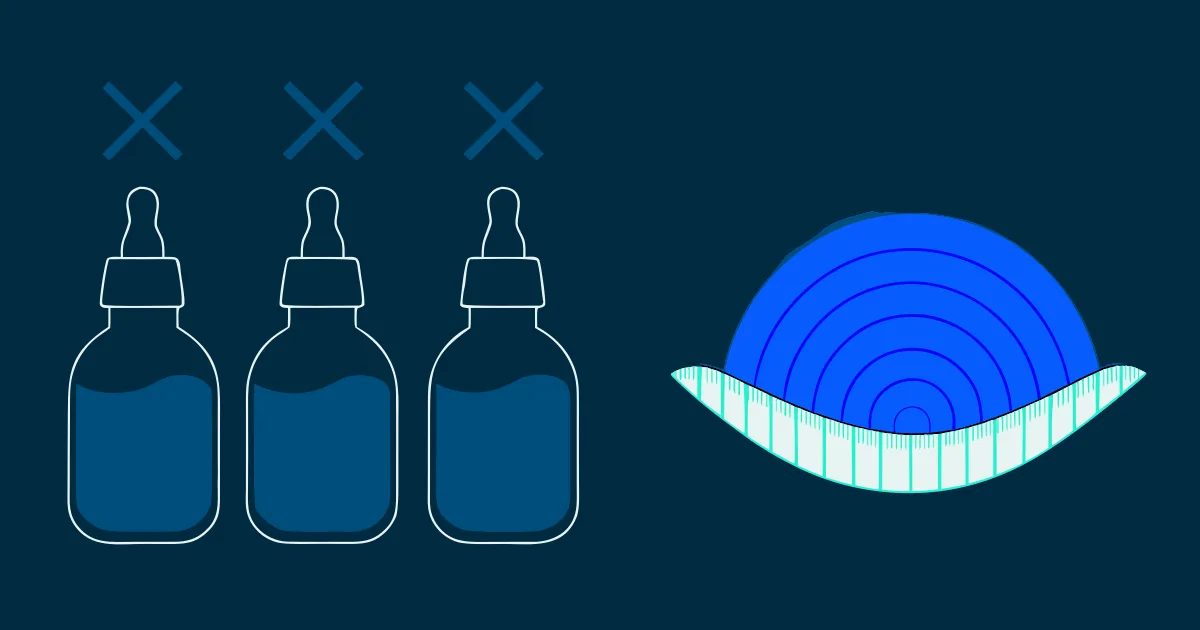
You have tried everything. Systane. Refresh. Blink. Preservative-free vials. Gel drops for nighttime. The expensive ones behind the pharmacy counter. And still — by lunchtime, your eyes burn. Your vision fluctuates when you read. You wake up with eyelids that feel glued shut. If this is you, you are not imagining it, and you are not doing anything wrong. The problem is simpler than you think: for the most common type of dry eye, drops cannot fix the underlying disease.
At EyeCare Center of Orange County, we see this story every week. Patients arrive with bags full of unopened bottles, frustrated that nothing is working. The honest answer almost always lies in one of two places — the tear film layer that drops cannot reach, or a diagnostic test that was never performed. Let's walk through it.
Dry eye is not a single disease. It is an umbrella term for several distinct problems that all feel similar but require completely different treatments. Calling them all "dry eye" and treating them all with drops is a bit like calling every type of chest pain "heartburn" and handing out antacids. The symptoms overlap, but the underlying mechanism determines whether a treatment will actually help — or just mask things for an hour until the next bottle.
The 4 Types of Dry Eye (TFOS DEWS II)
The international TFOS DEWS II framework is the most widely adopted classification system for dry eye disease. It divides the condition into four overlapping categories. Understanding which one you have is the difference between a treatment that works and a treatment that wastes your money.
1. Evaporative Dry Eye
Your tear volume may be fine. The problem is that your tears evaporate too fast because the oil layer — produced by the meibomian glands in your eyelids — is failing. This is the most common type, accounting for the majority of chronic dry eye cases.
2. Aqueous-Deficient Dry Eye
The lacrimal glands are not producing enough of the watery layer of tears. This is the type most people picture when they hear "dry eye," but it is actually less common than the evaporative form. It is associated with autoimmune conditions like Sjögren's syndrome, aging, and certain medications.
3. Mixed Dry Eye
Both mechanisms — poor oil layer and insufficient tear production. Mixed dry eye is very common in patients over 50 and in anyone with both MGD and systemic autoimmune disease. Treatment must address both layers simultaneously.
4. Hyperosmolar / Inflammatory Dry Eye
Regardless of which mechanism started the problem, once the tear film becomes chronically unstable, the tears become more concentrated (hyperosmolar) and trigger a self-sustaining inflammatory cascade on the ocular surface. This is why dry eye is increasingly recognized as an inflammatory disease — not just a lubrication problem. Drops do nothing to address this inflammatory loop; in fact, drops with preservatives like BAK can add to the irritation if used heavily throughout the day.
You may recognize yourself in more than one of these categories — mixed presentations are the norm, not the exception. A careful evaluation will stage each component so the treatment plan is matched to your specific blend of contributors rather than a one-size-fits-all bottle of artificial tears.
Why OTC Drops Fail for Evaporative Dry Eye
Artificial tears add water to the surface of your eye. That is essentially all they do. For the roughly 80% of patients whose primary issue is evaporative dry eye driven by meibomian gland dysfunction, that is the wrong fix for the wrong layer.
Imagine a pot of boiling water on the stove with no lid. You can keep adding water all day. It keeps evaporating. The solution is not more water — it is the lid. In the tear film, the oil layer is the lid. If your meibomian glands are blocked, inflamed, or atrophied, no amount of artificial tears will stop the evaporation.
What Drops Can Do
- Provide temporary comfort — minutes to an hour at most
- Dilute surface irritants after exposure to smoke, wind, or allergens
- Act as a short-term bridge while you pursue root-cause treatment
What Drops Cannot Do
- Unblock or restore function to meibomian glands
- Reduce eyelid inflammation or close abnormal blood vessels
- Eliminate Demodex mites or chronic blepharitis
- Reverse gland dropout visible on meibography
- Break the inflammatory cycle on the ocular surface
And one specific warning: redness-relief drops (those marketed to "get the red out") contain vasoconstrictors that can worsen dry eye over time. They should not be part of any long-term dry eye regimen.
The Diagnostic Gap Most People Miss
Here is the hard truth: if your previous eye exam did not include meibography, you may have never received an accurate dry eye diagnosis. A standard comprehensive eye exam checks your prescription, your intraocular pressure, and the health of your retina. It rarely includes the imaging needed to assess your oil glands.
Meibography is a specialized imaging test that photographs the actual structure of your meibomian glands. Healthy glands look like long, parallel tubes. In MGD, they shorten, twist, or disappear — a process called gland dropout, which is generally irreversible. Without this image, you are guessing at the diagnosis.
A thorough dry eye evaluation should also include:
- Tear osmolarity — measures tear concentration; elevated values signal inflammatory dry eye
- Tear break-up time (TBUT) — how long your tear film stays stable between blinks
- Corneal and conjunctival staining — shows where surface damage has already occurred
- Lid margin exam — grades blepharitis, telangiectasia, gland capping, and Demodex signs
- Symptom questionnaire (OSDI or SPEED) — objectively scores your symptom burden
If you have had chronic dry eye for more than six months and never had meibography, the question to ask is not "which drop should I try next?" It is "what do my glands actually look like?" The answer to that question will determine whether a real, root-cause treatment plan is even possible — and if so, which pathway makes sense.
Treatments That Actually Address the Root Cause
Once the correct type of dry eye is identified, modern treatment options can be genuinely life-changing. The key is matching the therapy to the mechanism.
For Meibomian Gland Dysfunction
- IPL (Intense Pulsed Light) therapy — reduces inflammation, liquefies meibum, and treats Demodex. Typically done as a series of four sessions.
- Low-level light therapy (LLLT) — gentle red light that calms lid inflammation and frees the oil flow, usually followed by gland expression.
- Low-dose doxycycline or azithromycin — oral or topical, for anti-inflammatory effect on the gland environment.
- Warm compresses with a dedicated eye mask — helpful as adjunct maintenance, but rarely sufficient as monotherapy for moderate or severe MGD.
For Aqueous Deficiency
- Prescription anti-inflammatories — cyclosporine (Restasis, Cequa) or lifitegrast (Xiidra) to address the inflammatory component and improve tear production over time.
- Punctal plugs — tiny, reversible plugs inserted in the tear drainage ducts to keep the tears you do produce on the eye surface longer.
- Autologous serum tears — custom drops made from your own blood serum. Reserved for severe surface disease where commercial drops are not enough.
For Severe or Treatment-Resistant Dry Eye
- Prescription omega-3 supplementation (at therapeutic EPA/DHA doses, not drugstore fish oil) to support meibum quality.
- Scleral lenses — large-diameter gas-permeable lenses that vault the cornea and hold a reservoir of sterile saline against the eye surface all day. For severe dry eye, post-LASIK dry eye, and surface disease associated with autoimmune conditions, sclerals can be transformative. We fit more than 500 scleral lenses per year in our office.
When to Escalate: Signs You Need a Specialist
Regular eye exams are great for healthy eyes. But dry eye disease — especially when drops have already failed — deserves a dedicated evaluation. Consider escalating to a dry eye specialist if you experience any of the following:
- Symptoms that persist despite months of artificial tears
- Vision that fluctuates during the day, especially on screens
- Waking with lids that feel stuck together, or noticeable morning crusting
- Burning, stinging, or a gritty sensation that worsens as the day goes on
- A history of LASIK, RK, or any corneal surgery — surgically induced dry eye often needs specialized management
- A diagnosis of Sjögren's, rheumatoid arthritis, lupus, thyroid disease, or rosacea
- Contact lens intolerance that developed over time
You do not need a referral. You do not need to have tried a specific number of drops first. If dry eye is affecting your daily life, a specialist evaluation is warranted.
Dr. Bonakdar's Approach
Dr. Alexander Bonakdar is a California-licensed optometrist and ABO Board-Certified, with more than 35 years of experience in complex ocular surface disease and specialty contact lenses. Our office is built to diagnose dry eye properly, classify it against the TFOS DEWS II framework, and match the treatment to the mechanism — not to a shelf in the pharmacy aisle.
If drops have not worked, it is time for a real diagnosis. Call (949) 323-3600 to schedule your comprehensive dry eye evaluation at EyeCare Center of Orange County. We serve patients from across Orange County — Santa Ana, Irvine, Tustin, Newport Beach, Anaheim, and beyond.
Doctor-Recommended Dry Eye Products
Shop preservative-free artificial tears, lid hygiene products, and warm compress masks at our online store.
Shop DryEyeLA Products →¿Tiene preguntas sobre su salud visual?
El Dr. Alexander Bonakdar y su equipo están aquí para ayudarle. Agende una consulta para hablar sobre sus necesidades específicas.